
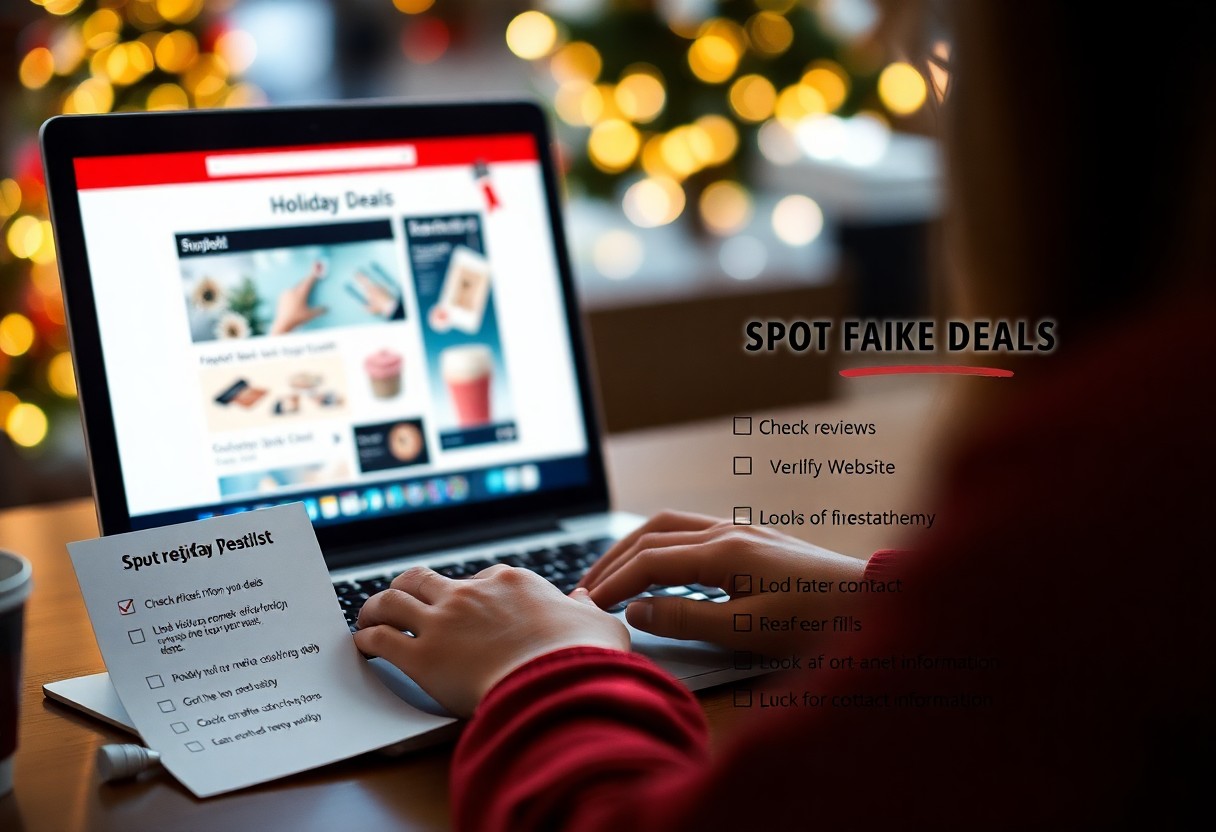
Over the holiday season, you may encounter an abundance of enticing deals and offers, but not all are genuine. Knowing how to identify fake holiday deals and fraudulent websites can save you money and protect your personal information. This guide will equip you with practical tips and strategies to discern legitimate sales from scams, ensuring that your shopping experience remains safe and enjoyable.
Key Takeaways:
- Verify the website’s URL and look for security indicators like HTTPS.
- Compare prices across multiple sites to identify deals that seem too good to be true.
- Check for clear contact information and customer reviews before making a purchase.
Understanding Fake Holiday Deals
Definition of Fake Deals
Fake holiday deals are promotions that promise significant discounts or products that are either non-existent or misrepresented. These offers often entice consumers during peak shopping seasons, leading to financial loss and disappointment as the products do not meet expectations or are never delivered.
Common Characteristics of Fraudulent Offers
Fraudulent offers typically exhibit several key traits. They often feature unusually large discounts, lack clear terms and conditions, include dubious endorsements, have poorly designed websites, and use high-pressure tactics to prompt quick purchases. Additionally, the contact information may be vague or nonexistent.
Be wary of offers that claim discounts exceeding 70% or prices significantly lower than competitors’. Websites lacking customer service contact details or displaying poor grammar and spelling are red flags. If the promotion demands immediate action or includes obscure payment methods, it’s likely a scam. Fraudsters often create a sense of urgency, suggesting that the quantity is limited or that the deal will expire soon, compelling you to make impulse decisions without proper scrutiny.
Essential Tips for Spotting Fraudulent Sites
When shopping online, knowing how to identify fraudulent websites can save you money and protect your personal information. Start by checking for HTTPS in the URL, which indicates a secure connection. Additionally, look for a physical address and customer service contact information. Verify the legitimacy of the site by reading reviews or using online reputation checkers. Always be cautious of prices that seem too good to be true, as this is a common tactic used by scammers.
- Check for secure connections (HTTPS)
- Look for contact information
- Research customer reviews
- Be wary of overly low prices
Any inconsistencies in website information could signal a potential scam.
Analyzing Website Credibility
Assessing a website’s credibility is vital for safe online shopping. You should scrutinize the domain name—fraudulent sites often use misspellings or unusual extensions. Look for trust indicators like professional design and proper grammar. Search for an “About Us” page and company history; credible businesses provide transparent information about their operations. Check domain age via WHOIS records as newer domains may be less trustworthy.
Recognizing Red Flags in Offers
Identifying red flags in holiday deals can help you avoid scams. Unbelievably low prices or “limited-time offers” often indicate fraud. Beware of sites pressuring you to make immediate purchases, as legitimate retailers do not rush customers. If a deal sounds too good to be true, it likely is. Always double-check if the same offer is available on well-known retail sites.
Many scams create urgency to entice you into hasty decisions. For instance, a website may advertise items at deep discounts but could vanish after the sale ends. Reports show that over 60% of online shoppers have encountered fake deals during holidays. Authentic retailers typically provide consistent pricing, promotions, and terms—watch for inconsistencies that hint at fraud.
Key Factors to Consider Before Making a Purchase
Prior to finalizing your transaction, it’s important to evaluate several key factors to avoid falling victim to scams. Focus on these elements:
- Website Security: Check for HTTPS and secure payment options.
- Return Policies: Understand the seller’s return and refund terms.
- Contact Information: Ensure there are reliable ways to reach customer support.
- Business Background: Verify the legitimacy of the company through reliable sources.
Perceiving these factors can significantly reduce your risk of being defrauded.
Price Comparisons and Research
Conducting thorough price comparisons can help validate discounts and avoid scams. Use multiple websites to cross-reference prices, considering reputable sources and aggregate deal sites. Bookmark products of interest and check them consistently over time, which can inform you if prices are unusually low. Most legitimate offers maintain consistent price ranges.
Price Comparison Resources
| Website | Description |
| Google Shopping | Compares prices across various retailers for a single product. |
| PriceGrabber | Aggregates product prices and reviews from multiple vendors. |
| Honey | Finds coupon codes and price tracking for online purchases. |
User Reviews and Feedback
User reviews provide invaluable insights into the reliability and quality of products and retailers. Before making a purchase, examine reviews from verified buyers on multiple platforms. A consistent pattern of negative feedback, especially regarding product quality or customer service, is a red flag. Ratings can help distinguish genuine deals from misleading offers.
Focus on detailed reviews to gauge customer satisfaction accurately. Pay attention to feedback regarding shipping times, product conditions, and seller responsiveness. A high volume of authentic, positive reviews boosts confidence in the purchase, while suspiciously few or excessively glowing testimonials may suggest a fraudulent website. Balancing insights from various review sites gives you a clearer perspective on the retailer’s credibility.
Protecting Yourself from Fraud
As holiday shopping ramps up, protecting yourself from fraudulent activities is imperative. Look for signs like unclear return policies, lack of contact information, and unrealistic offers that seem too good to be true. Always take extra precautions when sharing personal information and be wary of websites that don’t seem trustworthy.
Secure Payment Methods
Always opt for secure payment methods when shopping online. PayPal, credit cards, and other payment services often provide additional layers of protection against fraud. Avoid wire transfers or direct bank transfers, as these methods offer little recourse for recovering lost funds.
Importance of Privacy Policies
Understanding a website’s privacy policy can significantly help you identify trustworthy sites. Legitimate businesses clearly outline how they collect, use, and protect your data. If a site lacks this information or has a vague privacy policy, it’s a red flag indicating potential fraud. You should only share your data with those who respect and protect it.
Privacy policies detail the measures a company takes to secure your information. For instance, reputable companies often include encryption protocols and state their commitment to protecting customer data. If the privacy policy is absent, poorly written, or contains ambiguous language, reconsider your decision to make a purchase. Knowing your rights concerning your personal data fosters a safer online shopping experience.
Reporting Suspicious Activity
Acting promptly when you encounter suspicious activity can help protect others from falling victim to scams. When you spot a fraudulent site or deal, it’s vital to report it to the appropriate authorities. This not only raises awareness but also assists in preventing future fraud. Your vigilance plays a key role in mitigating the chances of others being scammed during the holiday season.
How to Report Fraudulent Sites
To report a fraudulent site, visit the Federal Trade Commission (FTC) website and use their online complaint assistant. Additionally, you can flag the site to web browsers or search engines, such as Google, which often have forms specifically designed for reporting scams. Collect evidence, such as screenshots and URLs, to aid in your report.
Resources for Victims of Online Fraud
If you or someone you know has fallen victim to online fraud, a variety of resources are available to help. Organizations like the FTC and the Internet Crime Complaint Center provide guidance on steps to take after a scam. You can also find support from local consumer protection agencies and online communities that share experiences and advice.
These resources can be invaluable for victims navigating the aftermath of fraud. The FTC offers detailed instructions on reporting identity theft, including a comprehensive recovery plan. Websites like IdentityTheft.gov create personalized plans and provide access to important documentation to dispute fraudulent charges. Furthermore, local law enforcement can assist in investigating the fraud, fostering a community approach to crime prevention. Leveraging these tools not only aids your recovery but also strengthens the fight against online scams for everyone.
Staying Informed about E-commerce Trends
Keeping updated with e-commerce trends can offer you valuable insights into potential scams and legitimate offers. As shopping habits evolve, so do the tactics used by fraudsters. For instance, the surge in mobile shopping has led to a rise in fake apps designed to steal your information. Being aware of these trends can help you navigate deals and recognize the warning signs of fraudulent behavior.
Following Trusted Sources
When considering staying informed, following trusted sources can make all the difference. Rely on reputable websites, industry reports, and expert blogs that focus on e-commerce security. Organizations such as the Better Business Bureau and the Federal Trade Commission provide real-time updates on scams, helping you to differentiate between genuine bargains and deceptive practices.
Understanding Seasonal Scams
Seasonal scams often emerge during high shopping seasons like the holidays. Scammers take advantage of your urgency to find the best deals by creating fake websites or offering non-existent products. According to the National Retail Federation, online sales during the holiday season can exceed $100 billion, making it an attractive target for cybercriminals. Knowing the common schemes can help you identify red flags, such as prices that are too good to be true or unfamiliar websites with poor design.
During the holiday season, you may encounter specific scams like phishing emails that impersonate well-known retailers or social media ads promoting unbelievable discounts. For example, a common tactic involves creating fear of missing out (FOMO) by claiming limited-time offers. Scammers may also use fake charity campaigns during this time, aiming to exploit your goodwill. Vigilance is key; always verify the legitimacy of any site or deal before clicking on a link or making a purchase.
Conclusion
Hence, by employing careful observation and critical thinking, you can effectively identify fake holiday deals and protect yourself from fraudulent sites. Always verify the retailers, scrutinize deals that seem too good to be true, and use secure payment methods. For more tips on secure online holiday shopping, check out Holiday Deals, Not Holiday Steals. This awareness is your best defense against scams during the holiday season.
FAQ
Q: How can I identify a legitimate travel website?
A: Look for secure payment options, check for contact information, and read reviews on third-party sites. Verify the website’s URL and ensure that it starts with ‘https://’ to indicate a secure connection.
Q: What red flags should I be aware of in holiday deals?
A: Be cautious of deals that seem too good to be true, especially those with significant discounts. Also, watch for websites that lack clear pricing information, have no refund policy, or pressure you to book quickly.
Q: How can I protect myself from fraudulent sites?
A: Use credit cards for online purchases, as they offer fraud protection. Always research the company online, including checking for a physical address and customer service contact. Utilize online tools to verify site safety before making any transactions.