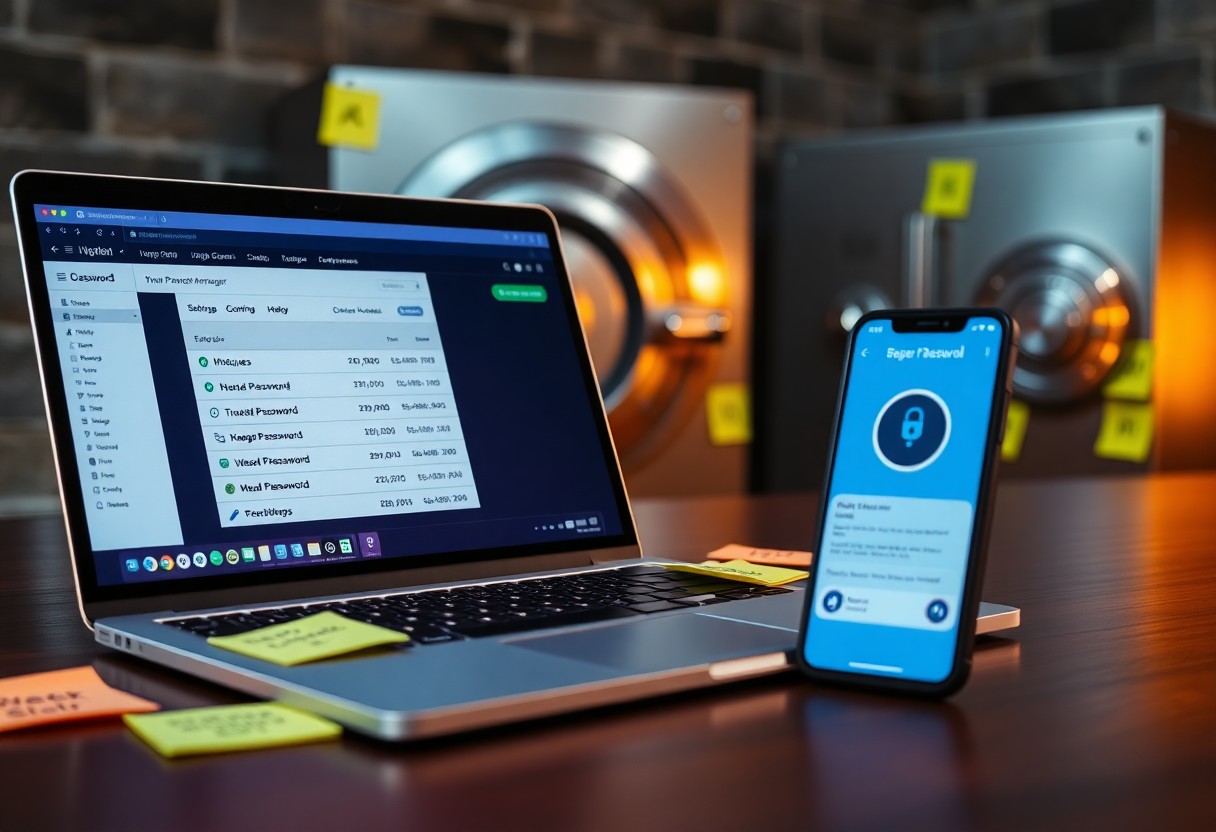
Safety in the digital age requires vigilance, and using a password manager is one of the best steps you can take to protect your online accounts. With the increasing frequency of data breaches and the complexity of managing multiple passwords, a password manager simplifies your online security by generating, storing, and autofilling strong passwords. By relying on this tool, you reduce the risk of password reuse and enhance your defenses against cyber threats, ensuring that your sensitive information stays private and secure.
Key Takeaways:
- Password managers generate and store complex passwords, reducing the risk of using weak or duplicated passwords across multiple accounts.
- They provide a secure vault for sensitive information, protecting users from phishing attacks and unauthorized access.
- Many password managers offer additional features like two-factor authentication and password sharing for enhanced security and convenience.
The Importance of Password Security
Securing your online accounts hinges on the strength and uniqueness of your passwords. Weak or reused passwords expose you to account takeovers and identity theft. In a landscape filled with data breaches, prioritizing password security has never been more vital. By investing effort into creating strong passwords and managing them effectively, you can significantly reduce your risk of falling victim to cybercriminals.
The Rise of Cyber Threats
Cyber threats are becoming increasingly sophisticated, with hackers employing advanced techniques and tools to breach security systems. In the past year alone, data breaches have exposed billions of personal records, and phishing attacks remain alarmingly prevalent. You need to stay informed about these evolving threats to effectively safeguard your digital life.
The Role of Strong Passwords
Strong passwords act as your first line of defense against unauthorized access. By combining uppercase letters, lowercase letters, numbers, and special characters, you create a formidable barrier. Passwords exceeding 12 characters significantly increase the time and effort required for brute-force attacks, making it important for you to develop complex codes that are not easily guessable.
Utilizing unique passwords for each of your accounts further enhances your security. For instance, if one account is compromised, your others remain safe from attack. Studies indicate that 81% of data breaches involve weak or reused passwords, underscoring the risks associated with poor password practices. Emphasizing the creation of strong, unique passwords can drastically lower your chances of falling victim to cyber threats, offering greater peace of mind in an uncertain digital environment.
What is a Password Manager?
A password manager is a specialized software tool designed to store and manage your passwords securely. By generating strong passwords and auto-filling them for you, it eliminates the burden of remembering multiple credentials across various platforms. This technology allows you to access your accounts easily while enhancing your overall online security.
Definition and Functionality
Essentially, a password manager encrypts and organizes your login information across different websites and applications. It safeguards this sensitive data behind a single master password, granting access while offering robust protection against unauthorized entry. Most tools also include features such as password generation, security assessments, and breach alerts for enhanced security.
Types of Password Managers
Various types of password managers cater to different user needs, including cloud-based and local storage options. Cloud-based managers store your data online, allowing access from multiple devices, while local managers keep information on your device. Additionally, some password managers are browser-based, integrating directly with web browsers for seamless password management.
| Type | Description |
| Cloud-Based | Accessible from any device with internet. |
| Local/Offline | Stores data solely on your device. |
| Browser Extensions | Integrates with web browsers for convenience. |
| Mobile Apps | Mobile-specific managers for on-the-go access. |
| Enterprise Solutions | Designed for businesses with added admin control. |
Cloud-based password managers excel in flexibility, allowing you to access your information from any device connected to the internet, ensuring your passwords are always within reach. Local solutions, while potentially limiting in accessibility, provide a sense of control over your sensitive data by storing it offline. Browser extensions offer efficiency and speed during web sessions, while mobile apps cater specifically to users needing password access while traveling or on the move. Enterprise password managers enhance organizational security, featuring dashboards for administration, ensuring that businesses can effectively manage and secure their password storage.
- This variety of options ensures you can find a password manager that fits your personal or organizational needs. Knowing your preferences can guide you to the most suitable choice.
When identifying a password manager, consider factors such as compatibility with your devices, user-friendliness, and encryption strength. Various brands facilitate unique experiences tailored to different user preferences. Additionally, some offer features such as secure sharing and multi-factor authentication, which can significantly bolster your online security measures. Ultimately, choosing the right type can empower you to maintain a strong and secure online presence.
| Consideration | Importance |
| Device Compatibility | Ensures usability across all your devices. |
| User Interface | Affects your ease of managing passwords. |
| Encryption Strength | Critical for safeguarding your data. |
| Extra Features | Enhance functionality and security options. |
| Customer Support | Essential for troubleshooting and inquiries. |
- Focusing on these elements allows you to select a password manager that aligns with your needs for both security and simplicity. Knowing these aspects can significantly influence your decision.
Benefits of Using a Password Manager
Utilizing a password manager presents numerous advantages that enhance your online security and overall user experience. By securely storing and automatically filling in your passwords, you can create strong, unique passwords for all your accounts without the hassle of memorizing them. This proactive approach to password management significantly reduces the risk of unauthorized access, keeping your personal information safer and more secure.
Enhanced Security Protocols
Password managers implement advanced encryption techniques and security protocols, ensuring that your sensitive information remains protected. By utilizing zero-knowledge architecture, these tools can safeguard your data, making it accessible only to you. This level of security minimizes the risk of breaches, as even the service provider cannot access your stored information.
Convenience for Users
Convenience is a hallmark of password managers, enabling you to access your accounts effortlessly. With one master password, you unlock a vault of credentials, simplifying the login process across multiple platforms and devices. This saves you time and frustration while ensuring that you never compromise on security.
The convenience of a password manager shines particularly when handling numerous accounts. You can easily generate intricate passwords, eliminate the need for repetitive password resets, and streamline access to your favorite sites. This tool not only saves time but also reduces cognitive overload, allowing you to focus on other tasks without the constant worry of forgetting passwords or relying on insecure methods, such as writing them down. When every second counts in your daily digital interactions, having instant access to all your credentials can be a game-changer.
How Password Managers Keep You Safe
Utilizing a password manager significantly enhances your online security by generating and storing complex passwords, making it nearly impossible for hackers to access your accounts. By automating the creation of unique passwords for each platform, you eliminate the risk of reusing passwords that can easily be compromised in data breaches. In addition to this, these tools often include features like two-factor authentication and security audits to further bolster your protection.
Encryption and Data Protection
Your password manager uses advanced encryption techniques to safeguard your data. This means that even if someone were to intercept your data, they couldn’t read it without the right decryption key. Most leading password managers utilize AES-256 bit encryption, which is a level of security comparable to that used by banks and government agencies. This means your passwords remain secure against unauthorized access.
Cross-Platform Accessibility
Password managers offer seamless cross-platform accessibility, allowing you to access your credentials from various devices, including smartphones, tablets, and computers. This ensures that you can log into your accounts quickly and securely, no matter where you are or what device you’re using.
Cross-platform accessibility is a game-changer for your daily interactions with technology. Imagine sitting at your desk, ready to log into an important account, only to realize you’ve forgotten your password. With a password manager, you don’t face this dilemma. You can use your smartphone or tablet to retrieve your credentials. Most password managers provide browser extensions and mobile apps, ensuring your passwords are at your fingertips anytime you need them. This not only saves time but also prevents the frustration of being locked out of your accounts due to password memory lapses.
Choosing the Right Password Manager
Selecting an effective password manager requires evaluating various options to find one that suits your needs. Consider usability, security features, and compatibility with your devices. A good password manager should make your life easier, enabling you to manage your passwords and other sensitive information seamlessly.
Key Features to Consider
When examining password managers, consider crucial features that enhance your security and convenience.
- End-to-end encryption
- Cross-platform support
- Two-factor authentication
- Password strength analysis
- Automatic password generation
- Secure password sharing
- Browser integration
- Digital wallet capabilities
Knowing these features will empower you to choose a password manager that keeps your information protected while being user-friendly.
Popular Password Manager Options
Several password managers are widely recognized for their reliability and robust features. Options like LastPass, 1Password, and Dashlane have gained significant popularity due to their secure storage and easy-to-navigate interfaces. For example, LastPass offers a free version with crucial features, making it an attractive option for users just starting. Meanwhile, 1Password and Dashlane provide premium features tailored for families and businesses, including account recovery and dark web monitoring. Each option allows you to enhance your security posture without compromising convenience.
Best Practices for Password Management
Implementing effective password management practices ensures your online security remains robust. Start by understanding and applying the principles of creating strong passwords and keeping them updated regularly to thwart unauthorized access.
Creating Strong Passwords
Your passwords should be unique and complex, incorporating a mix of upper and lower-case letters, numbers, and special characters. Aim for at least 12-16 characters and avoid easily guessable information like birthdays or common words. This complexity makes it difficult for attackers to crack your passwords through brute-force methods.
Regularly Updating Passwords
Updating your passwords on a regular basis can significantly enhance your online security. Set a schedule to review and change your passwords every three to six months, especially for sensitive accounts. This proactive measure reduces the risk of long-term exposure from any potential breaches.
Regularly updating passwords is vital because even strong passwords can become vulnerable over time, especially if a service you use experiences a data breach. By changing your passwords frequently, you mitigate the risk of unauthorized access to your accounts. Use your password manager to set reminders for updates and consider utilizing unique passwords for different accounts to further refine your security strategy.
To wrap up
As a reminder, utilizing a password manager significantly enhances your online security by storing and generating complex passwords for all your accounts. This ensures that you can maintain strong, unique passwords without the burden of memorizing them. By doing so, you reduce the risk of unauthorized access and identity theft. For further insights on effectively managing your passwords, visit Managing your passwords – NCSC.GOV.UK.
FAQ
Q: Why should I use a password manager instead of relying on memory?
A: Password managers store complex, unique passwords for each of your accounts securely. This eliminates the risk of using easily guessed passwords for multiple sites, reducing vulnerability to hacking attempts.
Q: How do password managers enhance online security?
A: They generate strong passwords automatically, ensuring that each login credential is difficult to crack. Additionally, password managers often include features such as two-factor authentication and security breach alerts to further protect your accounts.
Q: Are password managers safe to use, or can they be hacked?
A: Most reputable password managers employ strong encryption methods, making it extremely difficult for hackers to access stored passwords. Regular software updates and security audits also help maintain their integrity against emerging threats.